Misa de Gallo, or Mass of the Rooster officially kicked off the Christmas season in the country last Friday, 16 December. For nine days, called the novena, Catholics wake up early than usual and brave the nippy cold to hear mass. Originally a practice in Mexico, it was extended to the Philippines in the 16th century not out of tradition but for practical reasons: the dawn masses were timed very early so that the farmers during those time can fit it in their schedules as during the day, they’ll be busy with farm work. While this are dawn masses, the Tagalogs call it Simbang Gabi, literally night mass.
When we were still children, we used to accompany my lola (grandmother) and mother to these masses, oftentimes, because of the cold water, would just wash our faces instead of shower. After, we would then buy puto (unground steamed sticky rice with ginger) to be dipped in sugar (my fave) or paired with sweet ripe mangoes and thick tsokolate, made from tablea, medallion shaped bitter chocolate made from pure cocoa.
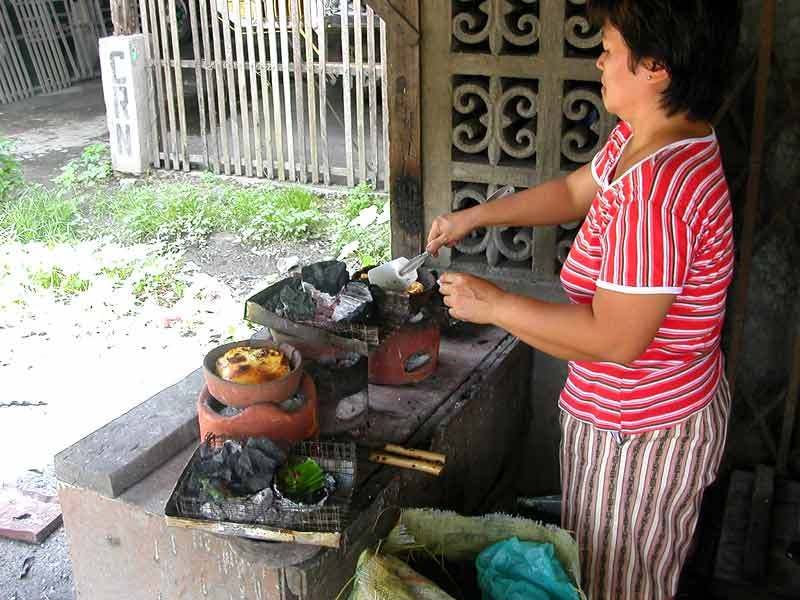
Especially loooove bibingka -- it's a rice cake with salted duck egg and goat's cheese, topped with butter, a sprinkle of sugar and grated coconut. Yum! I'm glad it's available all year round now.
This strange looking contraption is a steamer for the puto bumbong. The sticky rice flour mixture is placed inside the bamboo atop a steamer. The cloth around the wood is used so that it can be handled like placing the mixture or retrieving the puto.
Misa del Gallo - Midnight Mass Starts Dec.15
Saturday, December 15, 2007 | Label christmas, pinoy tradition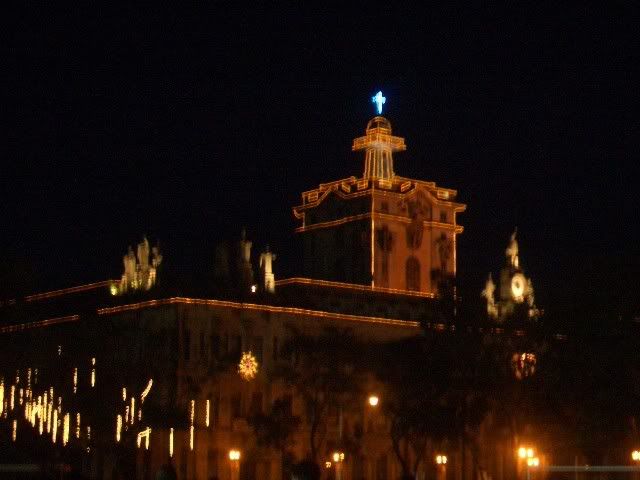

Cultural Origins of the Christmas Parol
Friday, December 14, 2007 | Label christmas, pinoy culture, pinoy tradition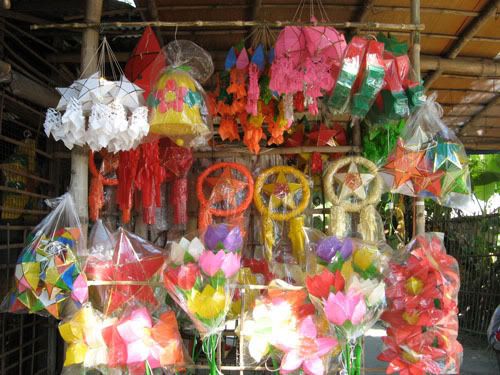
The villagers would walk around to appreciate the work of others and see who had the nicest design. When new stylistic variations appeared, such as different kind of tassels, steamers, or crowns around it, others would innovate their own creations and make palns to display their better parol the following year. This friendly competition was encoureaged by the church and the Spanish priests offered incentives for the people to invest time and money to make their parol the best as devotional offering to Jesus Christ. That is why during the Christmas season, some made it a practice to visit various churches that yearly display these new designs and better craftsmanship.
Today the parol is a main component in the Filipino celebration of Christmas which has become a Festival of Lights. The festivities cover the months ending with BER. Christmas music can be heard sporadically in the beginning of September and one could feel an increasing sense of the coming Christmas as more and more Christmas songs are played on the radio, and as more homes, businesses, streets and parks become brightly lit with wonderful colors. The mall and department stores are the first ones to decorate and showcase their managers and beautiful parol.
If there is one flower that's recognized a sign of the holidays, it's the Poinsettia. In addition to their role as traditional Christmas decorations, poinsettias can serve as tokens f goodwill, friendship and joy during the season and beyond. More than 50 million Americans will purchase a poinsettia plant this holiday season.
While 75 percent of consumers are said to prefer the familiar red version, there are currently more than 100 varieties available. White, pink, yellow and even variegated poinsettias are gradually gaining popularity.
Named after Joel Poinsett, who introduced this indigenous Mexican plant to the United States during the 1800s while he served as thenation's U.S. ambassador, poinsettias have become AMerica's best selling potted plant. More than 85 percent of all potted plants sold annually are poinsettias.
Here are some care handling tips for your own holiday classic from the floral experts at 1-800-FLOWERS.COM
~When purchasing your plant, slect poinsettias with dark green foliage, strong, stiff stems and completely colored flowers. MAke sure your plant has no fallen or yellow leaves and that it is fully balanced and attractive from all sides.
~Poinsettias thirve on bright, sunny natural daylight. Place your plant in indirect sunlight for at least six hours per day. Keep your room temperature between 68 and 70
degrees. Do not place plant near drafts, heating vents, or appliances.
~Water the plant when the soil surface feels dry to light touch. It's very important not to allow your plant to sit standing water.
~It is not necessary to fertilize your poinsettias when they are in bloom. However, after the hlidays, a balanced, all purpose household plant fertilizer will help maintain the rich green foliage color and promote new growth.
~Do not place your poinsettia outside, as the plant is sensitive to chilling temperatures.
Visit 1800flowers.com on the Web for wide selection of poinsettia plants and other great holiday gifts.
Poinsettias thrive on bright, sunny natural daylight. Place your plant in direct sunlight for at least six hours per day.

Big Christmas Trees All over the Malls
Wednesday, November 14, 2007 | Label christmas, pinoy traditionBig shining christmas trees are everywhere in all the malls of philippines. Its a tradition there to have those giant trees when christmas is coming. Oh how i miss going to all the malls there at Manila.
Parols (Christmas Ornaments)are also everynow. Even here in Daly City, lots of Filipinos hanging there lighting parol. Parols are traditionally made out of bamboo and paper although plastics are sometimes preferred and elaborate ones are made from capiz shells. They are traditionally star-shaped, and is thought of to symbolize the star of Bethlehem. They are usually hung outdoors on doors, patios, windows and other. They are the equivalent of Christmas wreaths in the western world.